Pharmaceutical Warehouse Requirements: Ambient Envelope, Batch Control and Records (2026)
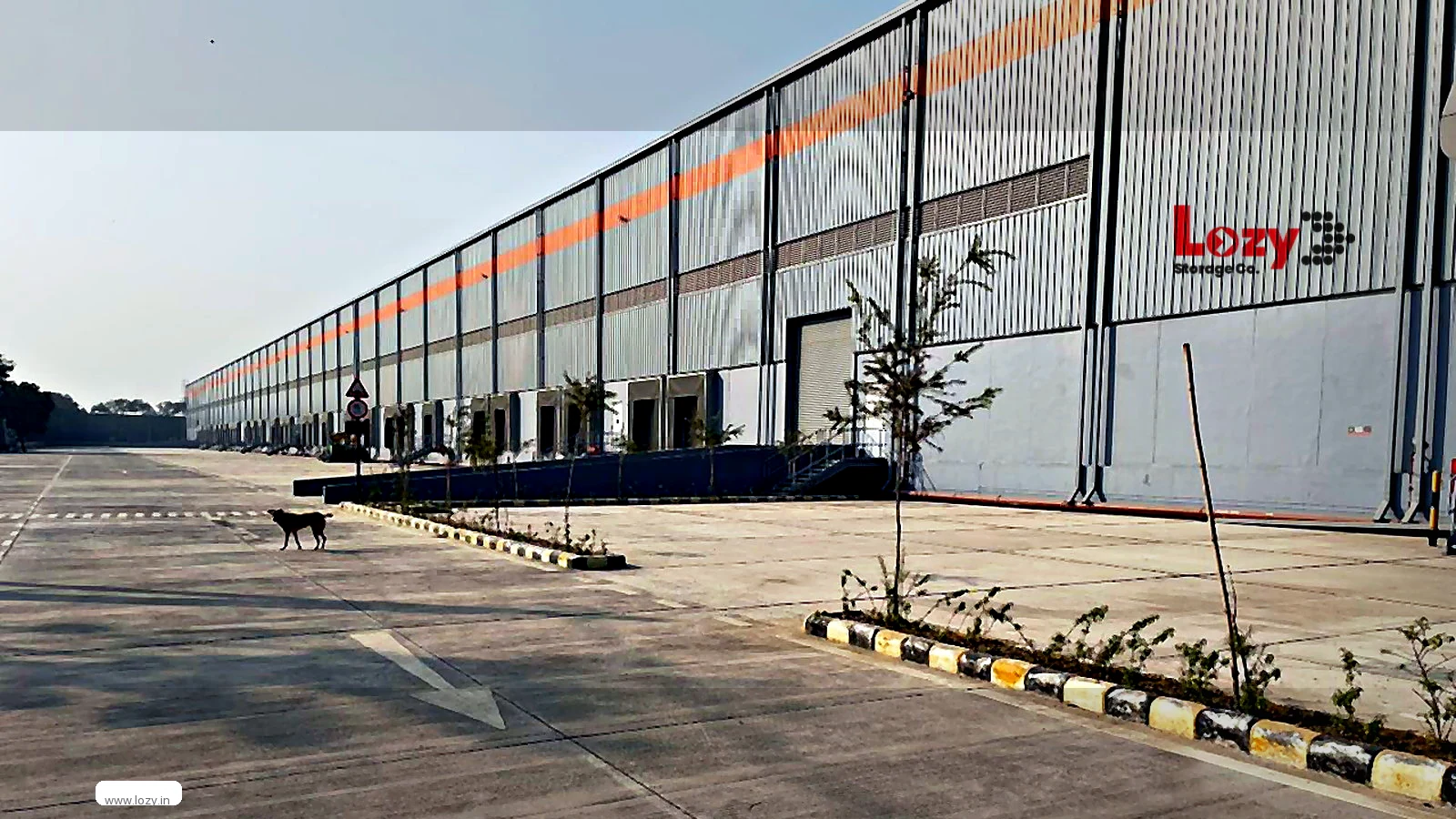
A pharmaceutical warehouse has to provide four things ordinary storage does not: an ambient envelope it can evidence through a Delhi June, a location for every batch rather than every product, a marked place for stock on hold, returned or recalled, and records that already carry batch numbers and licence numbers when an inspector asks. Pharmaceutical warehouse requirements are those four written as tests. The fifth is not the landlord's to give — the drug licence belongs to the business holding the stock, and it names premises. What follows is the specification to carry on a visit, on a starting basis of ₹21 per sq ft per month in Delhi NCR.
- Ask for the monitored record from the hottest week of last summer, with every device's position, before rate is discussed. A building that cannot produce it does not improve in July.
- One batch, one position. A location register keyed to product but not to batch is the exact mechanism by which a short-dated batch re-enters saleable stock.
- The drug licence is issued for named premises under Rule 64 of the Drugs Rules, 1945, and a wholesale premises must be at least ten square metres, in the charge of a competent person.
- Quarantine, returns and recalls each need a marked, restricted place of their own. It is the cheapest row on the sheet to insist on and the one most often missing.
Most pharmaceutical storage enquiries are written backwards: a rate, a distance, and a shed that looked tidy. A requirement sheet reverses the order — a page of numbers, each with a test attached, scored across two or three buildings before anyone quotes. The commercial picture, the storage classes and the site-choice argument are in the pharma warehousing guide; this post is the specification that sits behind it, and the service it describes is pharma and healthcare warehousing at Lozy.
What pharmaceutical stock demands from a building, and why weight is not the question
Pharma storage is a paperwork problem wearing a warehouse's clothes. A pallet of blister strips weighs a fraction of a pallet of castings, so floor load rarely decides the site. What decides it is whether the building holds a labelled ceiling through the worst week of the year, whether a batch can be found without opening a carton, and whether a carton on hold can be stopped from leaving.
The envelope: dry, off the floor, and closed at the edges
An ambient medicine store lives or dies on two weather events, not the average day. The first is the hot week in late May or June, when a bare metal roof radiates onto whatever stands under it and an open roller shutter at two in the afternoon turns the dispatch face into an oven. The second is the monsoon, when water arrives sideways at the shutter, up the wall base, and through a gutter nobody cleaned. A building answers both with roof insulation, a plinth above its own apron, gutters draining away from the doors, and racking that keeps every carton off the slab.
What the building must then show is evidence, not intention. Insulation is a drawing; a dated record of readings is proof, which is why the first acceptance row asks for a printout rather than a walk-round.
Batch identity as a location, not a field
Every pharma system carries a batch number and an expiry date as data fields. A warehouse requirement is different: the batch has to be a physical address. Product X, batch A, expiry March, in bay 14 level 2 — and batch B of the same product in bay 21, because it arrived later and expires later. Where two batches share a position the older sits behind the newer, and the picker under pressure takes what is in front. That single layout decision is where most pharma write-offs begin.
Hold status that exists in space
Quarantine, rejected, returned and recalled are four states, and a spreadsheet can hold all four without any of them being true on the floor. The requirement is that a carton on hold sits somewhere different, behind something that can be closed, marked so that anyone walking past knows not to pick it, and released only by a named person. Everything else in this specification is negotiable in degree; this one is not, because the failure mode is a recalled batch going out on a delivery van.
The test that follows from all three is speed of retrieval. A stockist or an inspector will not ask whether records exist; they will name a batch and wait. Ten minutes is a working store; a day is a store where the record is somebody's memory of a spreadsheet.
The acceptance specification: twelve rows to test on the visit
This is the table to attach to a requirement sheet. Score each row pass or fail, and treat three failures as a walk-away rather than a discount: the rows that fail in a pharma building are usually envelope and record rows, and neither is fixed after signature. These minimums are drafting benchmarks, not a substitute for a fire NOC, a structural certificate or a licensed engineer's opinion.
| Requirement | Minimum | How to test it on the visit | Why it matters for this trade |
|---|---|---|---|
| Monitored ambient temperature, with a summer record | A logged record covering the hottest week of last summer, at the positions nearest the shutter, under the roof and at the top rack level | Ask for the export, not a screenshot. Read the date range, the highest reading, where each device sits, and who signs the daily check. A wall thermometer photographed at ten in the morning is not a record. | The storage statement on the pack is a ceiling, and June is when an ambient shed tests it. No summer data means you fund the experiment. |
| Dry stowage through a monsoon | Every pallet on racking or dunnage, nothing on the slab, plinth above the apron, roof sheets and gutters sound, no tide marks at the wall base | Walk the wall base and the corners behind the racking with a torch. Look for paint bloom, salt lines on the plinth, and cartons with a wavy bottom edge. Ask what the floor did in the last week of July. | Moisture damages more ambient pharma stock than heat: labels lift, cartons soften, and a damp pack is unsaleable long before potency is questioned. |
| A batch-coded position, not a product position | Every receipt binned under product, batch and expiry, with the location written at put-away | Hand over one batch number and ask for its position on the spot. Then ask for a second batch of the same product and see whether it sits somewhere else. | One product, two batches, one location is how a short-dated batch hides behind a fresh one. |
| FEFO layout with a near-expiry position | Aisles that reach the oldest batch without moving the newest, plus a marked position for stock inside the last quarter of its shelf life | Ask which pallet a picker would take first, and why. Watch whether the answer is "whichever is at the front". | First-expiry-first-out is a property of the layout before it is a policy. Old stock behind new loses every busy afternoon. |
| A marked, lockable quarantine area | A physically separate bay, marked, with restricted access, for stock held pending a decision | Ask what happens to a consignment that arrives with a crushed outer. Follow the answer to a place, not to a procedure. | Hold status that lives only in a system is a status anyone can overwrite at seven in the evening. |
| Returns, rejects and recall cage | A separate cage or bay with three distinguishable statuses — returned, rejected, recalled — each with its own record and a named decision-maker | Ask to see the last three returns and what was decided about each. Then ask how a recalled batch would be kept out of the pick face. | Returns are the doorway through which near-expiry stock re-enters saleable stock, and CDSCO's guidance requires them quarantined on receipt. |
| Controlled access, camera cover and audit access | One manned entry, an access list you can read, a named camera retention period, and a visitor log that is actually signed | Ask for yesterday's log. Ask where the cameras point and for how many days footage is kept. Ask who may enter your bay without you. | A medicine carton is worth more per kilo than most cargo and carries a regulatory consequence when it goes missing. |
| A pest control programme with a signed schedule | A written programme, a bait station map, agents kept away from stock, and service reports held on site | Ask for the last four service reports and the map, then check the dates against a calendar rather than against the cover sheet. | Rodent damage to a pharma carton is a destroyed batch, and an auditor asks for the programme before the stock. |
| Cleaning and sanitation records | A written schedule by area and frequency, signed sheets, and a spill procedure with materials on site | Ask for the current month's sheet. Three missing weeks tell you the programme is a document rather than a habit. | Dust, broken glass and a leaked syrup all travel. Cleaning is the cheapest contamination control there is. |
| Receipt and dispatch records to the statutory fields | Batch and expiry captured at receipt; on wholesale supply the buyer's name, address and drug licence number, the drug, quantity, batch and manufacturer, signed by the competent person | Ask for one dispatch memo and check those six fields. Then ask how a month of memos would be produced for an inspector. | Rule 65 of the Drugs Rules sets these fields. An inspector reads the memo, not the dashboard. |
| Fire NOC for this address, and a hazard class that matches the commodity | A current NOC naming these premises, with sprinkler or detection design matched to cartons, inserts and shrink wrap | Read the address and expiry on the NOC, not the cover. Ask what the last pump and hydrant test showed and when the next is due. | A pharma warehouse burns as packaging: shippers, leaflets and stretch wrap carry the fire load, not the tablets. |
| Neighbour separation | No pesticide, solvent, paint, strong-smelling chemical or loose food commodity in the same bay or an adjoining undivided bay | Walk the neighbouring bays with your nose as well as your eyes, and ask what sat there last quarter. | Odour and vapour migrate through a shared shed. A consignment that smells of thinner is unsaleable even when the assay is perfect. |
Score the building before you sign
Send the twelve rows with your product list and the storage statement printed on each pack. We reply with which facilities pass them, and the rate for the space.
Send the specificationCall +91 93547 12345If you would rather have the sheet run with you, the pharma and healthcare warehousing team will walk a shortlisted building against the twelve rows and name the ones it fails.
Temperature and humidity: the ambient envelope you can actually ask for
There is no single ambient number in Indian drug law, and a warehouse quoting one is quoting its own convenience. What exists is a storage statement on each pack, an expiry period that holds only under that statement, and a facility that either keeps it or does not. The sheet therefore asks two questions: what does the label say, and what evidence exists that this building held it.
What the label fixes, and why the expiry date is conditional
Labels on medicines carry a storage direction — below 25°C, below 30°C, in a cool dry place, protect from light, do not refrigerate — and the shelf life printed beside it is calculated against that condition. Schedule P of the Drugs Rules, 1945 tabulates the life period of drugs with a column for the conditions of storage against each entry, which is the statutory version of the same idea: the period and the condition travel together. A batch held at 34°C for six weeks in June was not stored as labelled, whatever the carton says.
That is the whole commercial case for asking about monitoring before asking about rent. It is not about buying a cold room; it is about being able to say what the building did while your stock was in it.
What to ask a facility to show you
Five questions, all answerable in a room with a laptop open.
- The record itself, over a stated period. Dates, times, readings, device identity and the position each device occupies — not a graph of an average. A manual round honestly signed beats a continuous logger nobody reads.
- Where the devices sit. The positions that matter are nearest the shutter, the top level under the roof, the west-facing wall in the afternoon and the dispatch face. One sensor in the middle of an empty aisle measures the aisle.
- Who reads it, and how often. A named person, a stated frequency, initials on the sheet. A monitoring system with no reader is decoration.
- What happens on an excursion. Who is called, how fast stock is segregated, who decides the disposition, and what is written afterwards. Ask for the last one that actually happened.
- Humidity, if your line is hygroscopic. Effervescent tablets, dry syrups and powders in paper laminates are moisture-sensitive, and humidity is the reading most ambient sheds never take. If it is not measured, the honest answer is that it is not measured.
Where an ambient store stops being the answer
This has to be said without decoration, because the category runs on soft language. A product labelled for 2-8°C needs an insulated room or validated chamber, a mapping study showing how the room behaves empty and loaded, calibrated loggers, an alarm path that reaches a person at two in the morning, and a written excursion procedure. A frozen product needs the same discipline plus back-up power. A label that demands a humidity band or a light exclusion needs a facility built and validated for that band.
Those are specialist facilities, and they are not what an ambient commercial warehouse is. Lozy runs monitored ambient storage: dry, secure, camera-covered, consignments checked in and movements recorded. Lozy does not operate a cold room, does not offer 2-8°C storage, holds no validated mapping study for a refrigerated room, and holds no GDP certificate. If your range includes insulin, most vaccines, many biologicals or a reagent that must not freeze, that part of the range belongs with a cold-chain operator.
Batch, expiry and FEFO: the segregation that keeps write-offs out of the rack
Every pharma buyer has a version of this story. A fast-moving tablet arrives in March with eighteen months on it; the same tablet arrives again in June with nine. Both go into one bay because they are the same product, the June stock goes out first because it is at the front, and by the following spring the March batch is five months from expiry and no stockist will take it. The difference between the two events is a bay number.
The requirement is concrete and small. Each receipt gets its own position, recorded as product plus batch plus expiry, written at put-away rather than reconstructed at the next count. The aisle reaches the older position without unloading the newer one, which means a gangway a reach truck can work rather than a solid block of racking. And there is a marked near-expiry position — inside the last quarter of shelf life is the usual commercial trigger — into which stock is pulled so somebody can decide instead of discover.
The operating rhythm follows from the layout: first-expiry-first-out at every pick, a near-expiry list issued on a fixed date each month with quantity, value and position, and a rule about what happens when a batch is pulled — returned to the manufacturer, sold on a short-dated basis, or written off. CDSCO's guidance frames it as first-expiry-first-out with exceptions only where controls prevent an expired product from being distributed. That is the right standard, and it needs no special equipment.
Quarantine, returns, controlled access and the sanitation file
Four requirements sit together because they share one property: each is cheap to provide and expensive to be without. None needs capital equipment beyond a partition, a lock and a diary, and all four are read by an auditor in the first twenty minutes.
The hold status has to be physical
Quarantine means stock waiting for a decision — an intake with damaged outer packaging, a batch under a manufacturer's query, a consignment whose paperwork does not match. Rejected means a decision has been taken and the stock will not be sold. Returned means it came back from a stockist. Recalled means the manufacturer or the authority has called it in. CDSCO's guidance asks for separate, marked areas for these states with access restricted to authorised people, and for returned goods to be quarantined on receipt until somebody with authority decides their fate.
In a commercial store the practical version is a cage or walled bay with a locking door, three coloured status labels, and a register of what is in there, why, since when, and who decided. The test on a visit is not "do you have a quarantine area" — everyone says yes — but "show me what is in it today and why". If both are empty, ask what happened to the last damaged consignment.
Access, cameras and the visitor log
Controlled access has four visible parts. A single manned entry rather than three shutters anyone can walk through. An access list, so "who can get into my bay" has a written answer. Camera cover of the entry, the aisle and the dispatch face, with a retention period somebody names in days. And a visitor log with a name, an organisation, a purpose, times in and out, and an escort — the document that fails most often, because it is opened on day one and signed for a fortnight.
Two questions cost nothing: do the cameras record or only monitor, and can footage for a named date be produced? A camera showing a live picture in a guard room and storing nothing is a deterrent, not evidence.
Pest control and the sanitation programme
The requirement is a written programme rather than an occasional visit. A schedule with a fixed frequency, a map of bait stations and their numbers, agents chosen and placed so that there is no possibility of contaminating stock, service reports signed by the contractor and countersigned by the facility, and a record of any finding with the action taken. Rodent activity in a warehouse is normal; rodent activity with no record of it is a finding.
Sanitation runs alongside: a cleaning schedule by area and frequency — floors, racking, dispatch face, returns cage, toilets kept apart from storage — signed sheets for the current month, and a spill procedure with the materials on the shelf rather than in a manual. The guidance also asks that food, drink and smoking stay out of storage areas and that rest and wash facilities sit away from product; a kettle and a stack of cups on a pallet tells you what the written procedure is worth.
Licences and documents: the business holds the drug licence, the premises hold the rest
The most useful sentence in this post is that a drug licence is not a warehouse licence. It is granted to a person or firm for named premises, applied for at state level, and it is the business holding the stock that must hold it. A warehouse can be licensed in its own right if it is itself distributing, but it cannot lend its licence to yours — and an operator offering to "arrange" one is describing something you should see in writing before a carton moves.
What the business itself must hold
- The drug licence for these premises. Wholesale runs on Form 20B, with Form 21B added for Schedule C and C1 items — biologicals, vaccines and the like; retail runs on Form 20 and Form 21. The forms sit in the Drugs Rules, 1945 published by CDSCO, and the application goes to the State Licensing Authority.
- A premises that satisfies Rule 64. The authority must be satisfied the premises are adequate, equipped with proper storage accommodation for preserving the properties of the drugs, and in the charge of a competent person. For Form 20B and 21B the rule sets a floor of ten square metres, and the competent person is a registered pharmacist, a matriculation pass with four years' experience, or a degree holder with one year's.
- The address question, settled in writing. Because the licence names premises, a third-party address is a question for your licensing authority: whether it is endorsed on your licence, and what record is expected there. Ask in writing and keep the reply; the answer varies by state.
- GST registration with this premises added. Rent is an input only against a tax invoice, and a warehouse address is an additional place of business rather than something the registered address covers. The procedure is on the GST portal.
- The right licence for the right line. Nutraceutical and supplement products are licensed as food rather than as drugs, so a range mixing tablets with protein powders carries two licence sets, the second from FSSAI. A sheet that assumes one licence covers a mixed catalogue is wrong at the first inspection.
- IEC where anything is imported, and stock insurance in your own name — the facility's policy covers the building, not your material.
What the premises must be able to show
A document file, produced before the first vehicle. Proof of lawful occupancy naming the entity that invoices you and identifying the shed on a plan. A current fire NOC for this address and this use. Land-use confirmation that storage is permitted on the plot. Structural confirmation of the floor, and the racking design with its last inspection where racking is fitted. Building insurance with a written answer on which policy covers your stock. GST tax invoice capability in the contracting entity's name. And the power connection agreement.
Read three fields on each document — entity, address, expiry — and expect one to be wrong. A fire NOC issued for the landlord's other unit in the estate is the commonest substitution.
GDP-aligned practice, said as practice
The distribution standard the sector argues about is good distribution practice, and CDSCO publishes a draft guidance document on good distribution practices prepared in line with the WHO technical report series on good storage and distribution. Read it for the sections on premises, temperature and environment, dispatch and receipt, documentation and returns, because a stockist's quality team asks in exactly that order.
It is guidance, not a certificate. Nobody can hand you a GDP certificate for a shed, and a rate card carrying the letters describes an intention, not an audit. What can be checked is narrower: does the store segregate holds, rotate on expiry, keep the statutory fields, run a pest programme, and produce a batch's history on demand. Those five answers are the practice. Lozy calls itself GDP-aligned in that operational sense, holds no GDP certification, and says so rather than printing a badge.
If your own quality team has a supplier questionnaire, send it before the visit rather than after. Start the document check here and we will tell you which items a Lozy facility provides and which sit with you as the licence holder.
Record-keeping: what is written down, how often, and for how long
Eleven records carry a pharma store. Each needs a format, an owner, a frequency and a retention period — and the periods are not a matter of taste: Rule 65 sets some directly and the guidance sets others.
| Record | What it must contain | Frequency | Who signs it off |
|---|---|---|---|
| Goods receipt note | Date, vehicle, supplier and the supplier's drug licence number, invoice, product, batch, expiry, quantity received and rejected, condition of the outer, photographs of damage | Every receipt, closed the same day | Receiving supervisor |
| Location register, keyed to batch | Product, batch, expiry, zone, rack, level and bay, with the date of put-away | At put-away; audited weekly | Store controller |
| Stock ledger by batch | Opening, receipts, issues, returns, adjustments and closing, so that a batch can be followed from intake to dispatch | Entry at each movement; reconciliation monthly | Store controller, countersigned monthly |
| Near-expiry report | Every batch inside the agreed window, with quantity, value, position and proposed action | Monthly, on a fixed date | Commercial owner and quality lead |
| Quarantine register | What is held, why, since when, who decided, and the disposition with its date | Every movement in or out | Designated person |
| Returns and recall register | Source, batch, expiry, condition on return, decision, credit note or destruction reference | Every occurrence | Designated person, with the client |
| Dispatch memo | The statutory fields — buyer name, address and drug licence number, drug, quantity, batch, manufacturer — plus e-way bill reference and gate-out time | Every dispatch | Competent person under the licence |
| Temperature and humidity log | Device identity, position, interval, readings, the daily check, and any excursion with the action taken | Continuous or at a stated interval; reviewed daily | Facility manager |
| Pest control and cleaning file | Programme, bait map, service reports, cleaning sheets by area, spill records | Monthly service; cleaning daily | Facility manager |
| Access and visitor log | Name, organisation, purpose, time in and out, escort, and any bay entered | Every visit | Security supervisor |
| Statutory and training file | Fire NOC, power agreement, insurance, calibration certificates, training records for everyone who handles stock | Quarterly, tracked to expiry | Facility manager |
Retention separates a well-run store from a lucky one. Rule 65 requires registers and records kept for not less than two years from the last entry, and carbon copies of the cash or credit memos used for wholesale supply for three years from the sale. The CDSCO guidance adds two counts that matter to a stockist: temperature and humidity monitoring records for at least the shelf life of the stored product plus one year, and distribution documents for a year after expiry. Write the longer period into the agreement; an inspection in year three is not unusual.
Three numbers worth reporting monthly
Batch accuracy against the physical count, so that the register and the rack agree. The value of stock inside its near-expiry window, so that the decision is commercial rather than a surprise. And the time taken to produce one batch's full history, which is the only honest measure of whether the record is a system or a habit. A store that reports all three every month is doing the work; a store that reports stock value alone is reporting the easy part.
What moves the monthly figure in this trade
Six inputs move a pharma storage bill, and the rate per square foot is one of them. Pharma cartons are light for their volume, so the useful unit is the pallet position rather than the slab, and two quotes compared on rate alone usually compare two buildings.
- Storage class. Ambient stock is commercial space. A controlled-climate requirement is a specialist facility with validation, redundant plant and alarms, and no negotiation closes the gap. Be clear which class your range actually needs.
- Positions, not square feet. A batch-coded store needs more positions than a product-coded one, because two batches cannot share a bay without recreating the problem the specification exists to prevent. Price the positions the stock requires, at the height the building yields.
- Handling intensity. Checking batch lines at intake, verifying expiry and label condition, picking against a stockist indent and staging against an order take longer than moving a sealed pallet. Handling is a larger share of a pharma bill than of most categories and belongs on its own line.
- The record format. Records to your template, your fields and your report dates are desk work. A quote that ignores them gets adjusted in month two, usually by somebody deciding the format was optional.
- Returns and disposal. A returns cage needs handling, a decision and sometimes a destruction certificate. Ask how returns are charged before the first one arrives, because the first one always arrives.
- Term and seasonality. Tender and scheme cycles lift in a block and settle afterwards. A monthly basis lets space grow for the lift and step down after it.
The published bases measure different things, so compare like with like. Monitored ambient space starts at ₹21 per sq ft per month in Delhi NCR on the warehouse for rent page, and the same basis applies to racked space under business warehousing. Where stock runs as a ledger reconciling batch by batch, price the inventory and stock storage basis, published from ₹4,499 per month. A long-term hold for slow institutional stock is published from ₹1,199 per month under long-term warehousing, a short consignment fits on-demand warehousing, and archived registers have their own basis at ₹49 per box per month.
Each is a starting rate, billed monthly with a GST invoice and no long lock-in, gathered on the pricing page. Converting a square-foot rate into a cost per pallet position at a given height is worked through in the cost per pallet guide, and the storage classes behind those bases are set out in the pharma warehousing guide.
Want the bill modelled on your batch count?
Give us the product list, the number of live batches you carry and your dispatch pattern. We will come back with the positions required and the monthly figure.
Model my requirementCall +91 93547 12345The five ways pharmaceutical storage fails, and the row that catches each
Failures in this category are quiet. Nothing falls over; a batch becomes unsaleable, or a question cannot be answered. Each of the five maps back to a row in the table.
One: the batch that shared a bay
Two receipts of one product go into one position because they are the same product. The older batch ends up behind the newer, the picker takes the front, and eight months later a near-expiry report surfaces a batch that has been invisible since June. No theft, no damage — a layout decision, and the write-off is its cost. The row that catches it: a batch-coded position, tested by asking for two batches of one product.
Two: the returns bay that became storage
Four cartons come back from a stockist in week three and are put wherever there is room, because the returns process was never agreed. Within a fortnight they are indistinguishable from saleable stock. The next count finds them, or the next dispatch sends them out. The row that catches it: a returns cage with three statuses and a register, tested by asking what was decided about the last three returns.
Three: the record format agreed on a call
Somebody agrees that batch, expiry and quantity will be captured at intake, and the first consignment arrives to a sheet that captures pallet count. The person who designed the format was not the person at the gate. Write the format down, run one observed intake with your team present, and compare the sheet against the template before the second vehicle books in. The row that catches it: statutory record fields, tested by reading one dispatch memo end to end.
Four: the temperature promise nobody documented
A facility says the shed stays under 25°C "because of the insulation". No record exists, June arrives, and the question of what happened to the batch becomes unanswerable in the only direction that matters. The mirror failure is buying a cold-chain claim with no mapping study behind it. Ask for the record, ask where the devices sit, and accept "we do not measure that" as a complete answer rather than a bad one. The row that catches it: monitored ambient temperature with a summer record.
Five: the neighbour nobody checked
The shed is clean, the racking new, the rate keen — and the adjoining bay holds agricultural pesticide, or a solvent-based adhesive, or loose foodgrain with its own pest problem. Odour travels through a shared roof void, vapour travels further, and a consignment that picks up either is unsaleable with a perfect assay. Ask what sat there last quarter, and who else the landlord has. The row that catches it: neighbour separation.
The pattern is the same in all five: each failure was cheaper to prevent than to repair, and visible to somebody who knew what to look for. That is what the table is for, and how the pharma and healthcare warehousing team scopes a site. Where stock is shared rather than dedicated, the shared and multi-client warehouse guide sets out the separation to insist on.
From requirement to first dispatch, and the clauses that make it binding
Nine steps take a requirement to a working pharma store. The order matters more than the speed, and the two most often skipped — the written layout and the observed test intake — are the two that prevent expensive surprises.
Nine steps
- Write the requirement sheet. The twelve rows, the product list, the storage statement on every pack, the number of live batches, and the dispatch pattern by stockist and institution.
- Classify the range and remove what is not ambient. Anything labelled 2-8°C or frozen goes to a specialist facility at this step, not at the intake gate. Doing this first stops the whole project being negotiated around a line the building cannot hold.
- Settle the licence question in writing. Ask your State Licensing Authority what the third-party address requires, and keep the reply. This is the step buyers most often defer and most often regret.
- Request the document file before visiting. Occupancy, fire NOC for this address, land use, structural and racking confirmation, insurance, power agreement, GST status of the invoicing entity.
- Visit with a test kit. A torch for the wall base, a min-max thermometer to leave for a day, one carton from each extreme of your range, and a printed copy of the table. Score rows on the spot rather than from memory in the car.
- Agree the layout on the drawing. Batch positions, the near-expiry position, the quarantine bay, the returns cage, the pick face and the inbound flow. A layout agreed verbally is a layout that will be rearranged by whoever is on shift.
- Agree the record format, then run an observed intake. One vehicle, several batches, one of them damaged, one of them short-dated. Watch where the damaged carton goes and what is written down about it.
- Set access and escalation. Your named users, the access list, alarm contacts, the escalation path out of hours, and the person who may release stock.
- Measure the first month. Batch accuracy against the count, the near-expiry report on its fixed date, and the time to produce one batch's history. Then decide, while the arrangement is still monthly and easy to change.
Where the first consignment is a tender lifting or a scheme drop that lands over a weekend, send the sheet and the layout on WhatsApp before the vehicle is booked, and we will mark up what the facility can and cannot do with that intake.
The clauses that matter for this trade
- The ambient envelope, as a term. What is monitored, where the devices sit, at what interval, who reviews the readings, and what happens on an excursion. A temperature clause that promises a number without naming a record is decoration.
- What the facility is not. Say plainly that the premises are ambient, that no validated cold room, mapped chamber, freezer or GDP certification is provided, and that controlled-climate stock is excluded. Put the exclusion in, because it protects both sides at the first mis-shipment.
- Batch-coded positions and rotation. One position per batch, first-expiry-first-out at every pick, and the near-expiry window with its reporting date.
- Quarantine, returns and recall. The bays, the labels, who may release, the decision timeline, and who pays for handling and destruction.
- Access and audit rights. Your right to enter, to count, to audit on notice and unannounced, to see the visitor log and the pest file, and to bring a stockist's or an auditor's representative with you.
- Records: ownership, format, retention, exit. Yours, in your format, retained for the longer of the statutory period and the shelf-life-plus-one-year rule, and handed over in a usable export on exit — not as a PDF of a screen.
- Restricted and hazardous lines. What will not be accepted, including narcotics, Schedule X handling beyond your licence, solvents, pesticides, and anything requiring a dedicated hazardous store.
- Liability and insurance. Whose policy covers the stock, at what basis a loss is valued, the excess, and how a concealed shortage discovered at a stock count is treated.
- Handling and charges, itemised. Per pallet in, per pallet out, per batch line checked, per return processed, per re-labelling task. "Inclusive" is not a number.
- Term, notice, and the exit. Monthly or fixed, the notice period, the days allowed to release stock after notice, and who provides equipment for loading out.
- GST and invoicing. The entity that invoices, its GSTIN, and the place of supply. A rent receipt where a tax invoice belongs quietly costs you the input credit.
Hold the agreement beside the requirement sheet before signing. A row that lives only in an email is a preference, and preferences leave with the staff who wrote them. Where the alternative is a full-service partner, the 3PL warehousing in Delhi NCR guide sets the two routes side by side, and the contract logistics guide covers the contracting side.
Where Lozy fits, and where we do not
Lozy runs 77+ warehouses and more than one million square feet of live space from a Delhi NCR base, with monitored ambient positions, controlled access, camera cover and movement records kept the way each client specifies. Space starts at ₹21 per sq ft per month, an inventory-led plan from ₹4,499 per month, billed monthly on a GST invoice with no long lock-in. What is free now is on the warehouse listing, the belts are set out under locations and in the Gurgaon, Faridabad and Haryana warehousing guides, and the full service set sits on the services page.
Not every pharma enquiry belongs here. There is no cold room in this network, no 2-8°C storage, no freezer capacity, no validated temperature mapping study and no GDP certificate. Narcotics, Schedule X stock beyond a client's own entitlement, solvents, pesticides and anything needing a dedicated hazardous store are not ours to hold. A product needing a controlled-climate or refrigerated store belongs with a specialist facility, and we say so on the first call.
Where the range is ambient — tablets, capsules, syrups, dry powders, supplements, ayurvedic lines, dressings, disposables, PPE, reagent kits whose label permits it, and institutional tender stock — and the requirement is batch-coded positions, a hold area, controlled access and records that reconcile, it is squarely inside what this network does. Photos of a working facility are on the pharma and healthcare warehousing page; the general questions are on the FAQ page, and contact us reaches a person.

If the requirement is on the right side of that line, email the requirement sheet to care@lozy.in with the product list and the storage statement from each pack, and we will reply with the facilities that pass the twelve rows and the rate, usually within the working day.
Related guides
- pharma warehousing: classes, licences and cost
- the warehouse inspection checklist
- warehousing in New Delhi
- inventory and stock storage
Take the specification to a site, not a brochure
Tell us the product list, the batch count and the belt you want to be on. We will confirm which facilities pass the twelve rows and hold them for your visit.
Book the site visitCall +91 93547 12345Sources. Prices and network numbers are Lozy's published information, checked 25 October 2026. Drug licensing, licence forms, premises conditions and record retention follow the Drugs Rules, 1945 as published by CDSCO; storage and distribution practice follows CDSCO's draft guidance on good distribution practices, prepared in line with the WHO technical report series; food and supplement licensing from FSSAI; GST registration and additional place of business from the GST portal; sector context from IBEF's pharmaceuticals profile. The minimums in the acceptance table are drafting benchmarks for a requirement sheet, not a substitute for a fire NOC, a structural certificate or a licensed engineer's opinion, and nothing here is a statement of regulatory approval for any facility.
Last updated: 25 October 2026. Something the FAQs below do not cover? Call +91 93547 12345 or email care@lozy.in.
Need warehousing or storage in India?
Request a free, tailored quote in under 2 minutes — free pickup, no lock-in.